Thinking about the unbuiltOur blog
What Is a Virtual Real Estate Showroom and Why More Developers Are Using One
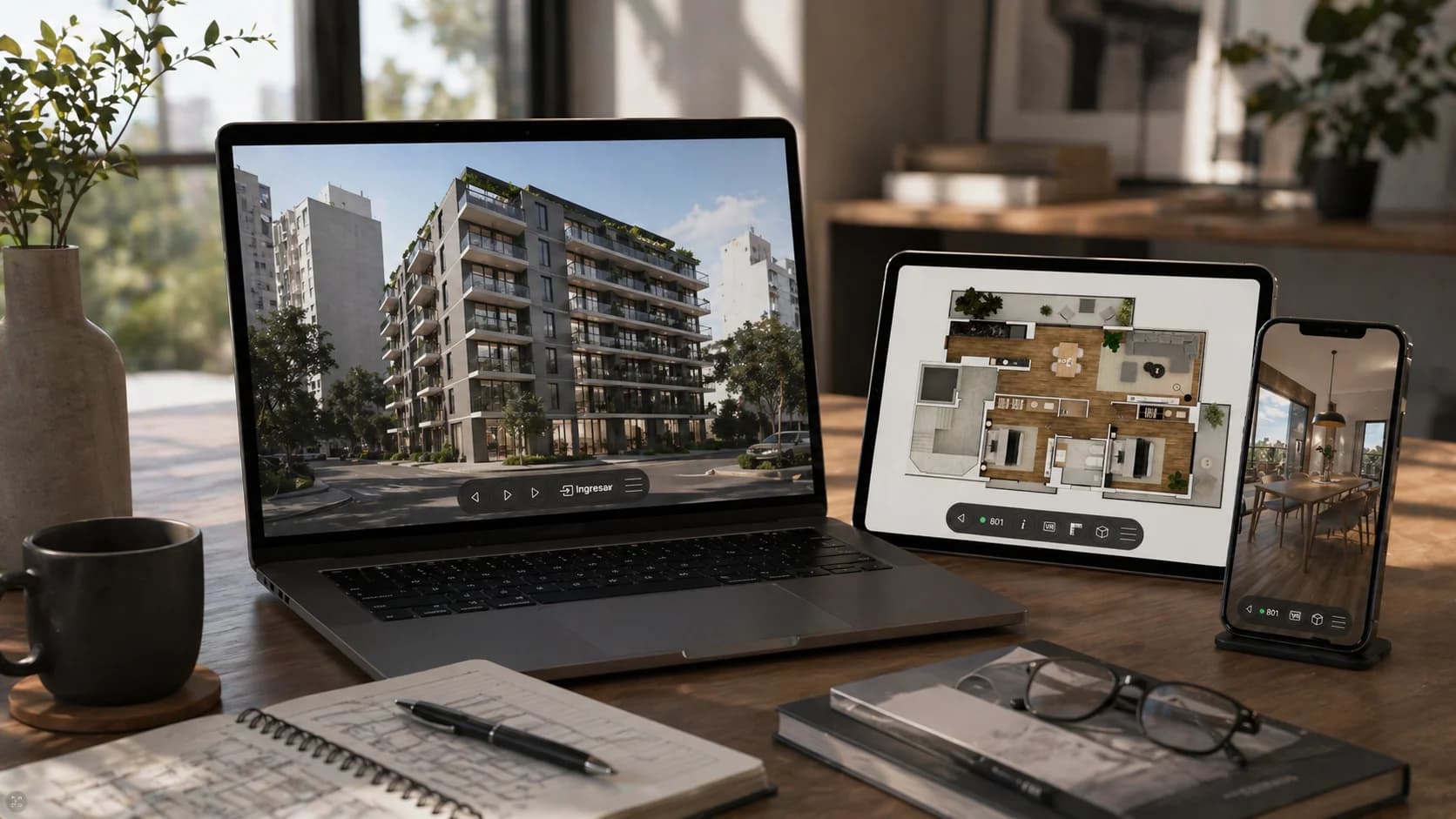
A virtual real estate showroom is a digital experience created to present a real estate project in a clearer, more attractive and more marketable way before construction is complete. Instead of displaying renders, floor plans, availability and contact information separately, it brings everything together into one navigable environment.
For years, real estate sales relied on a fragmented system: renders on one side, brochures on another, PDFs, spreadsheets and commercial messages filling in the rest. That model still exists, but many developers now need something stronger: an experience that helps people understand the project, not just look at it.
That is where the virtual showroom comes in. It is not simply a prettier website. It is a tool that organizes the buyer’s commercial journey. It allows users to view the development, move through floors, explore units, check commercial availability, access plans and understand what they are considering in a much more complete way.
The main difference is comprehension. A render can create desire. A virtual showroom can create desire and also explain. That combination is especially valuable in pre-construction or under-construction developments, where everything depends on making something tangible before it physically exists.
This type of solution also matters not only for end buyers, but for brokers, sales teams and real estate marketers. It gives them a stronger tool to present, share and follow up.
In premium or high-ticket developments, where image and perceived value are part of the sale, the virtual real estate showroom stops being an extra and starts becoming a competitive advantage.
A virtual real estate showroom helps present a development better, explain it more clearly and sell it more effectively before it is built. That is why more and more developers are making it part of their sales strategy.
Read next
Interactive Showroom vs. 360° Virtual Tour: Real Differences and When Each Makes Sense