Thinking about the unbuiltOur blog
What a 3D Real Estate Showroom Should Include for Developers and Brokers
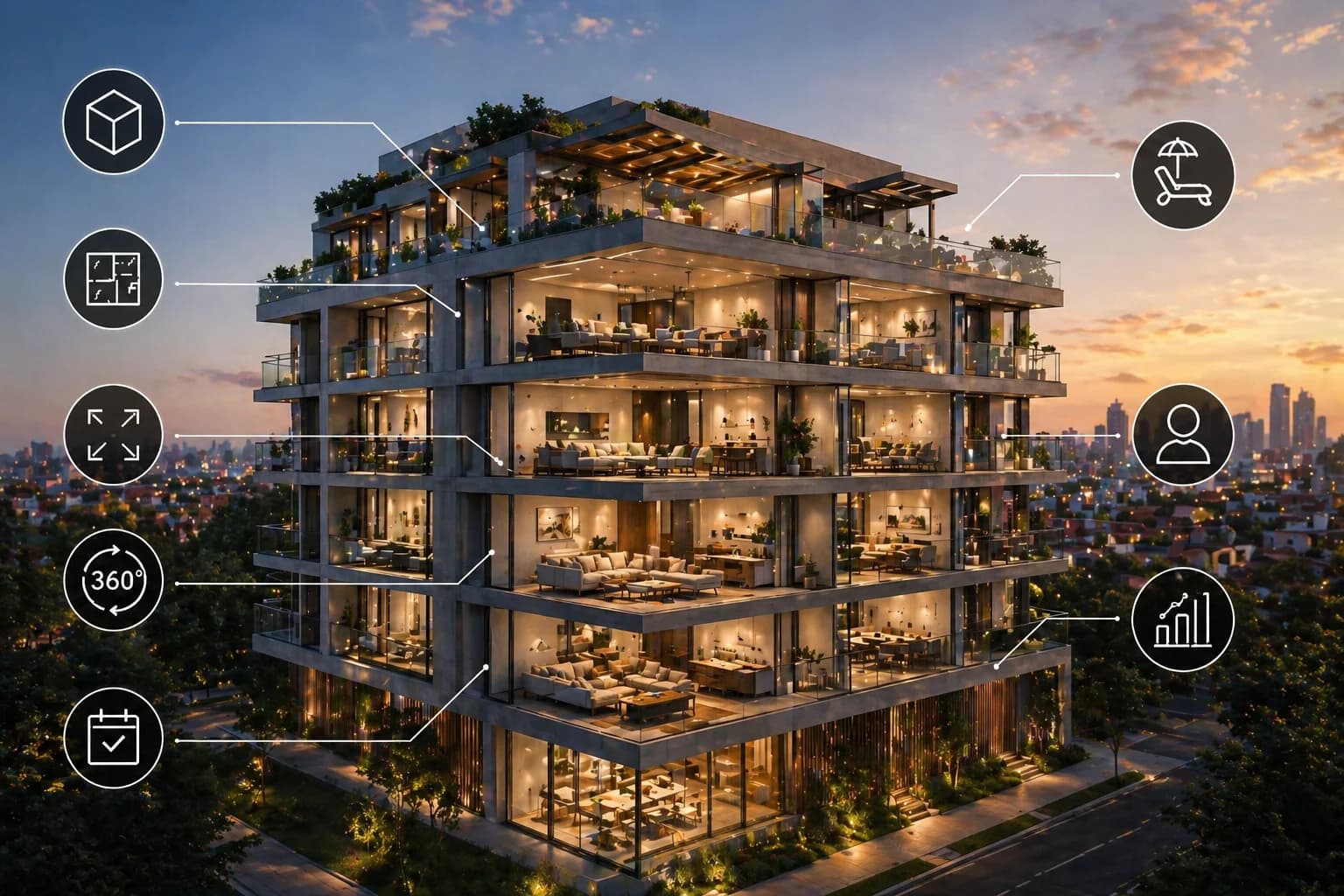
It is not enough for a 3D real estate showroom to look impressive. To truly help present and sell a development, it needs to solve a set of key commercial functions.
Visual quality matters, of course. But in this kind of tool, appearance alone is not enough. What creates real value is the combination of visualization, navigation, commercial information and update capability.
That is why, when a developer or brokerage evaluates this type of solution, the question should not only be how it looks, but what it includes and how useful it really is for selling better.
1. General project navigation
The first thing a 3D real estate showroom should include is a clear way to move through the development. Users need to understand what they are seeing and how to move inside the experience.
That means having general project views, fluid scene changes and a navigation logic that allows people to orient themselves without effort.
When navigation is well resolved, the project stops feeling like a collection of separate assets and starts to feel like an integrated experience.
2. Floor and unit exploration
In most developments, one of the most important features is the ability to explore levels and specific units.
A strong showroom should allow users to move through floors, identify layouts and access individual units directly. This becomes especially important in projects with multiple configurations, because it helps compare options more clearly.
It is not only about showing a floor plan. It is about turning the structure of the project into something truly navigable.
3. Individual unit sheet
Each unit should have a clear and complete detail sheet. This is one of the most important commercial cores of the system.
At a minimum, it should include:
total and covered area
number of rooms
bedrooms and bathrooms
price, when applicable
commercial status
short description
brochure or downloadable material
contact option
When this information is well organized, the showroom stops being only a visual asset and starts functioning as a real sales tool.
4. Complementary viewing modes
Not everyone understands space in the same way. That is why an effective 3D real estate showroom should offer more than one viewing mode.
Ideally, it should combine:
a rendered main view
a 2D floor plan
VR or 360 content, when the project allows it
This flexibility improves the user experience and makes the project easier to explain through different ways of reading space.
5. Updated availability
One of the major mistakes in many real estate presentations is that the visual experience does not connect properly with the real commercial situation.
An effective showroom should make it possible to show which units are available, reserved or sold, and keep that information updated.
This adds clarity, reduces unnecessary questions and improves the sales follow-up process significantly.
6. Amenities, gallery and location
A project is not only about the units. Context, shared spaces and the way they all fit into the overall proposal also matter.
That is why a well-resolved showroom should also include:
amenities
image and video gallery
location
surroundings or map access
The more unified the experience, the stronger the perception of the development will be.
7. Lead capture and contact
A 3D real estate showroom should not stop at visualization. It should also help turn interest into action.
That means including contact access, forms or WhatsApp integration so the user can reach out when interest is at its highest point.
Without that conversion layer, the showroom may look good, but it loses strength as a commercial tool.
8. Ongoing commercial management
Another key point is that the system should not become frozen once it is launched.
A truly useful showroom should allow updates to:
availability
prices
unit information
generated leads
This post-launch administration turns it into a living asset for the sales process instead of a static presentation piece.
Conclusion
An effective 3D real estate showroom is not defined only by how it looks. It is defined by how well it can present, explain and support the sale of a development in a clearer and more useful way.
When it integrates navigation, units, availability, visual content, contact and commercial management into one experience, it stops being just a presentation asset and becomes a real sales tool.
And in a market where the way a development is presented before construction matters more and more, that can make a decisive difference.
Read next
Interactive 3D Showroom vs. Standalone Renders: What Works Better for Presenting a Real Estate Development