Thinking about the unbuiltOur blog
How a Premium Commercial Experience Can Increase the Perceived Value of a Real Estate Development
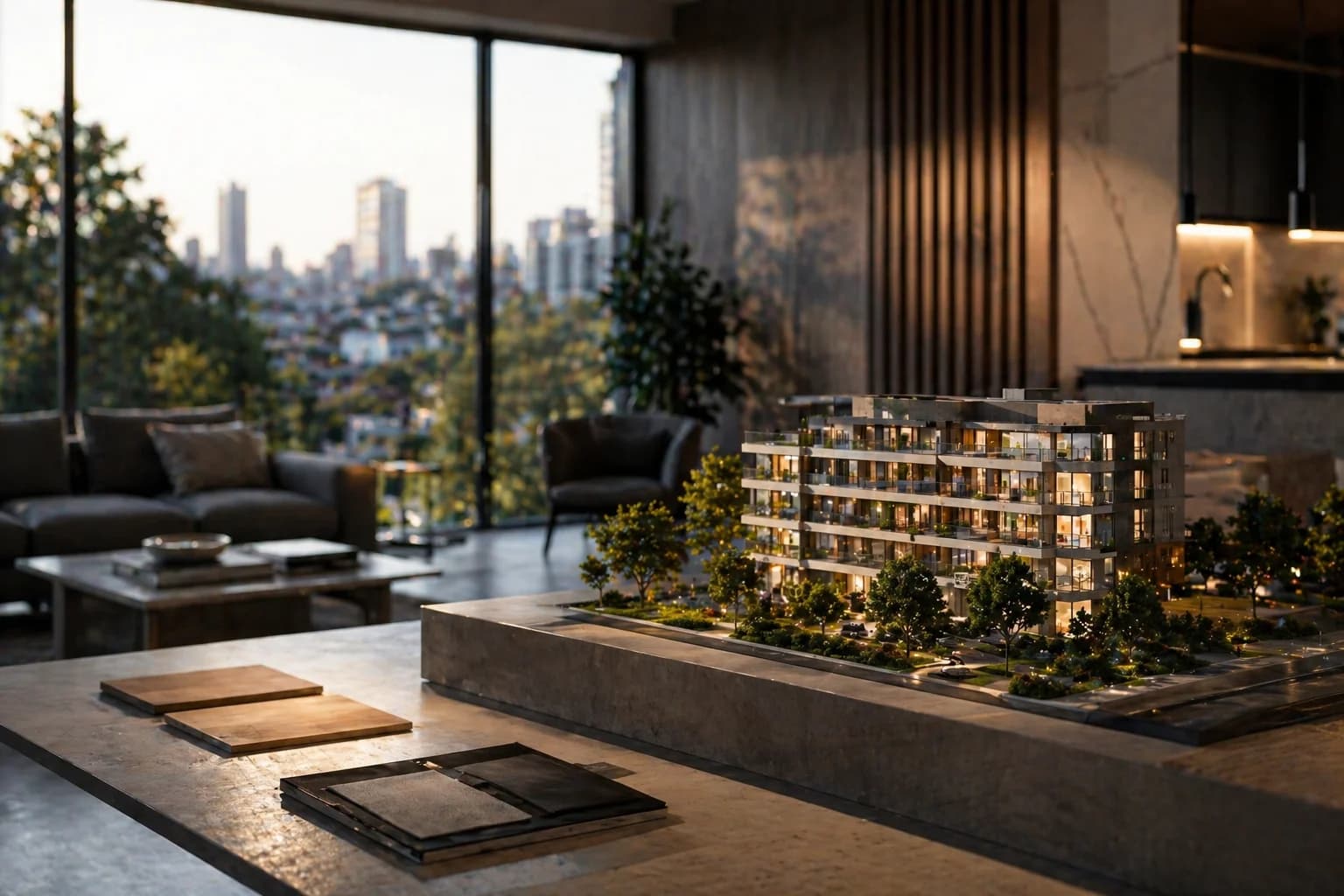
In higher-end real estate developments, value is not built only through square footage, amenities or location. It is also built through perception.
The way a project is presented to the market directly influences how it is interpreted. In premium or high-ticket segments, that difference matters. It can reinforce the proposal or weaken it.
That is why, when a developer invests in architecture, visualization and positioning but ends up presenting the project through fragmented materials or weak tools, a contradiction appears. The development wants to communicate one thing, while the commercial experience communicates something else.
Presentation is part of the product
Commercial presentation is often treated as something that comes after the project itself, as if the development existed first and only then needed to be shown. In practice, that separation does not really work.
In real estate, especially in pre-construction or under-construction sales, presentation becomes part of the product. It is the way buyers first enter a vision that has not been physically built yet.
That means the quality of that experience has a direct impact on how the development is perceived.
What a premium experience communicates
A premium commercial experience is not only about aesthetics. It is not just about having nicer renders or a more sophisticated website.
What it communicates goes deeper:
coherence
solidity
attention to detail
clarity
trust
perceived value
When all of that is present in the way a project is shown, buyers tend to read it as a more serious, more refined and better resolved proposal.
The problem with scattered assets
One of the most common mistakes in presenting developments is relying on commercial assets that may work individually, but do not build a unified experience.
Renders, videos, floor plans, brochures, spreadsheets and sales messages may all be strong on their own. But if the user has to jump from one piece to another to understand the project, the experience loses power.
In premium developments, that fragmentation works against the proposal. The higher the value of the product, the more important it is that the experience lives at the same level.
How it affects perceived value
A project is valued not only by what it offers, but by how it is perceived.
When the presentation is clear, immersive and well resolved, it helps:
improve understanding of the project
reduce uncertainty
reinforce differentiating attributes
communicate professionalism
make the development feel more real
This does not replace the architectural product, but it does strengthen the way it reaches the market.
A tool for sales, but also for positioning
In many cases, the commercial experience is considered only in terms of conversion. But in higher-end developments, it also serves a branding function.
It does not only help sell units. It also helps position the project, build stronger perception and align the presentation with the overall promise of the development.
When that experience is well resolved, the project is not only easier to understand. It feels better.
Conclusion
A premium commercial experience can increase the perceived value of a real estate development because it turns presentation into an active part of the proposal.
In a market where many projects are shown through acceptable materials but weak experiences, offering a clearer, more coherent and more powerful way to present can become a real advantage.
Especially before construction is complete, experience is one of the strongest ways to make the project’s value feel tangible.
Read next
What a 3D Real Estate Showroom Should Include for Developers and Brokers